
Bin-shaped flight path highlights the technology behind modern business travel
A light aircraft pilot has created an unusual spectacle off the Essex coast by flying a route in the shape of a bin, with the distinctive flight path captured by aircraft tracking service Flightradar24.
For business travellers accustomed to using flight tracking technology to monitor aircraft movements, delays and arrivals, the story provides an entertaining example of just how precisely modern tracking services can record a journey through the skies.
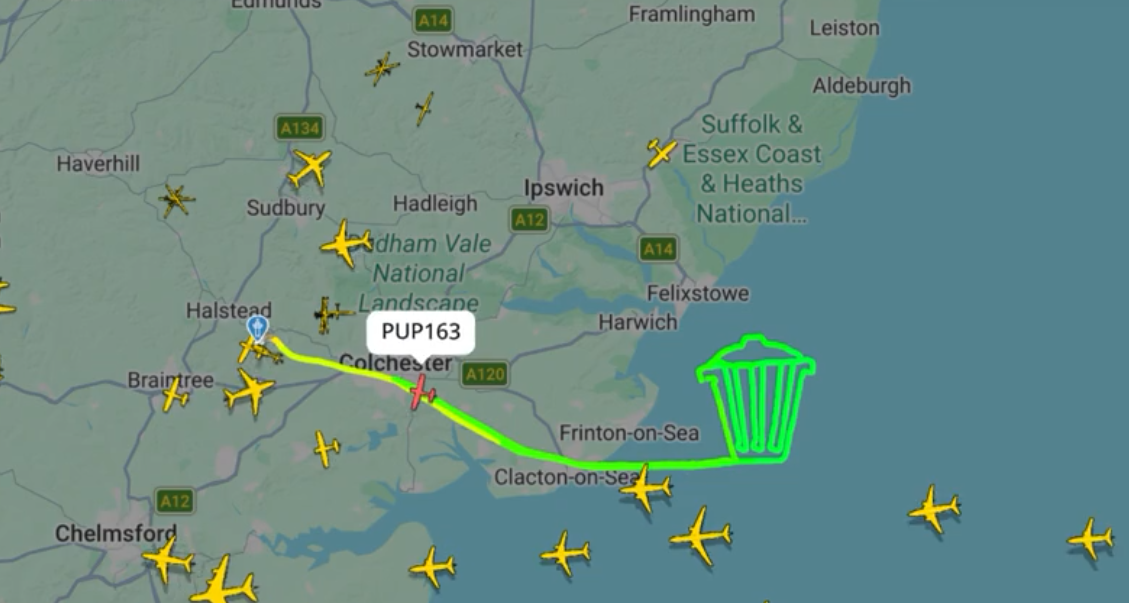
Image: FlightRadar24
The privately owned light aircraft took off from Earls Colne airfield, near Colchester, at 2.48pm on Saturday 8 August and landed again at 4.13pm. During the flight, the pilot spent around half an hour flying between approximately 2,100ft and 4,150ft above the sea near Clacton, carefully zigzagging across the sky to create the outline of a bin.
According to Flightradar24, the aircraft is privately owned, while the identity of the pilot has not been revealed. The unusual route appears to have been a tribute to Count Binface, the satirical political candidate and self-proclaimed space warrior who is known for wearing a distinctive bin-shaped helmet and is standing in the Clacton byelection.
While drawing pictures in the sky is hardly part of the average business travel itinerary, the stunt highlights the remarkable amount of information now available through aircraft tracking technology. Services such as Flightradar24 allow travellers and those responsible for booking and managing business travel to follow aircraft movements in near real time, providing useful information about the progress of individual flights.
For business travellers, access to timely flight information can be particularly valuable when disruption occurs. Knowing the location and status of an aircraft can help travellers and travel managers understand what is happening and make more informed decisions about connections, transfers, meetings and other onward arrangements.
Paul Baker, Sales Director of Global Travel Management, said:
“Most business travellers will be rather more interested in getting from A to B efficiently than drawing pictures in the sky, but this is a great example of the extraordinary visibility we now have of aircraft movements. For people travelling on business, having access to accurate, up-to-date information can be extremely useful, particularly when plans change or flights are disrupted.”
Flight tracking has become an increasingly familiar part of modern air travel. As well as being used by aviation enthusiasts, tracking services can provide passengers with another source of information about the progress of their journey and the whereabouts of an aircraft.
For people undertaking business travel, however, flight information is about considerably more than curiosity. Delays and disruption can have consequences for meetings, hotel bookings, ground transport and connecting flights, making reliable and timely information particularly important.
This latest flight may have been undertaken for rather more light-hearted reasons, but the resulting image provides an eye-catching demonstration of the technology that makes it possible to follow aircraft as they travel through UK and international airspace.
It is also a reminder that, while most business travel follows a considerably more direct route, modern aircraft tracking means some of the more unusual journeys taking place above us are unlikely to go unnoticed.