
Singapore-based Scoot has been named the world’s most emissions-efficient airline in Cirium’s 2025 rankings, with Qatar Airways, Ryanair and Turkish Airlines leading among the largest global carriers.
This latest data will be of particular interest to UK-based business travel buyers and travellers who are increasingly under pressure to reduce the environmental impact of their business travel programmes while maintaining global connectivity, as it highlights which airlines are delivering the most efficient operations in terms of carbon emissions.
Cirium’s 2025 EmeraldSky Annual Review ranks the world’s 100 largest airlines based on CO₂ emissions per available seat kilometre (ASK), providing a robust and independently assured benchmark for emissions efficiency across the aviation sector. The methodology, assured by PwC to ISAE 3000 standards, categorises airlines into Gold, Silver and Bronze tiers and also identifies leading carriers across regions and key long-haul corridors.
Scoot, the low-cost subsidiary of Singapore Airlines, secured the top position globally, overtaking 2024 leader Wizz Air, with strong performance driven by high seat density and longer average flight sectors. The airline recorded emissions of approximately 51 grams of CO₂ per ASK, outperforming all competitors.
Among the world’s largest airlines, Qatar Airways, Ryanair and Turkish Airlines were recognised as the top three most efficient carriers when measured by total seat capacity, underlining how operational scale and efficiency can be combined effectively.
Jeremy Bowen, CEO of Cirium, said
“Airline emissions performance comes down to decisions airlines can control - fleet choices, seat configuration and how aircraft are deployed on routes. The airlines at the top of these rankings have got those fundamentals right, and it shows. Better emissions efficiency and lower fuel bills go hand in hand.”
The rankings also reinforce a broader industry trend: airlines operating newer aircraft fleets and higher seat densities, particularly low-cost carriers, consistently outperform competitors on emissions efficiency. At the same time, long-haul airlines are closing the gap through fleet modernisation, with newer widebody aircraft helping to improve efficiency on intercontinental routes.
Regionally, the report highlights leaders across key markets, including Wizz Air in Europe and Virgin Atlantic on transatlantic routes, demonstrating how performance varies depending on network structure and operating model.
Paul Baker, Sales Director of Global Travel Management, said
“For UK-based organisations, understanding airline emissions performance is becoming a critical part of managing business travel responsibly. Insights like these help our customers make more informed choices that balance sustainability, cost and operational efficiency without compromising on the quality of their travel programmes.”
The findings provide valuable intelligence for travel managers seeking to align corporate travel policies with sustainability targets, particularly as reporting requirements and stakeholder expectations around business travel emissions continue to evolve.
For more flights on any of these emissions-efficient airlines, please contact your Global Travel Management Account Manager.
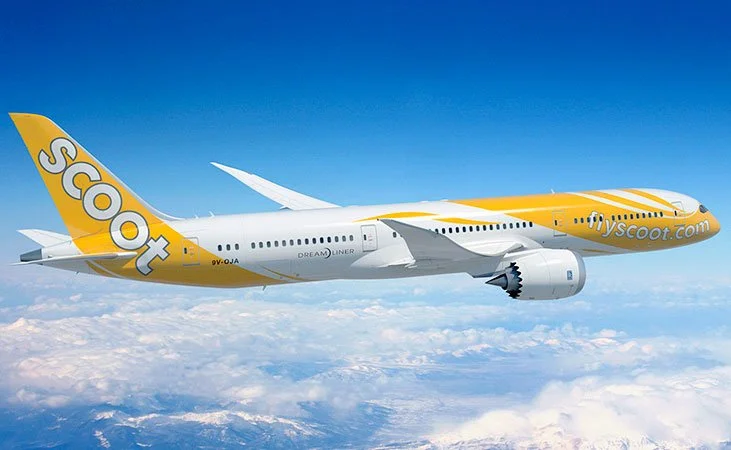
Scoot’s Boeing 787 Dreamliner, operated by the world’s most emissions-efficient airline in Cirium’s 2025 rankings, highlights how modern aircraft are shaping more sustainable business travel options