
Six in ten frequent flyers have, at some point, decided against booking a trip because they expected the journey to be too stressful, according to new research published by aviation technology specialist SITA.
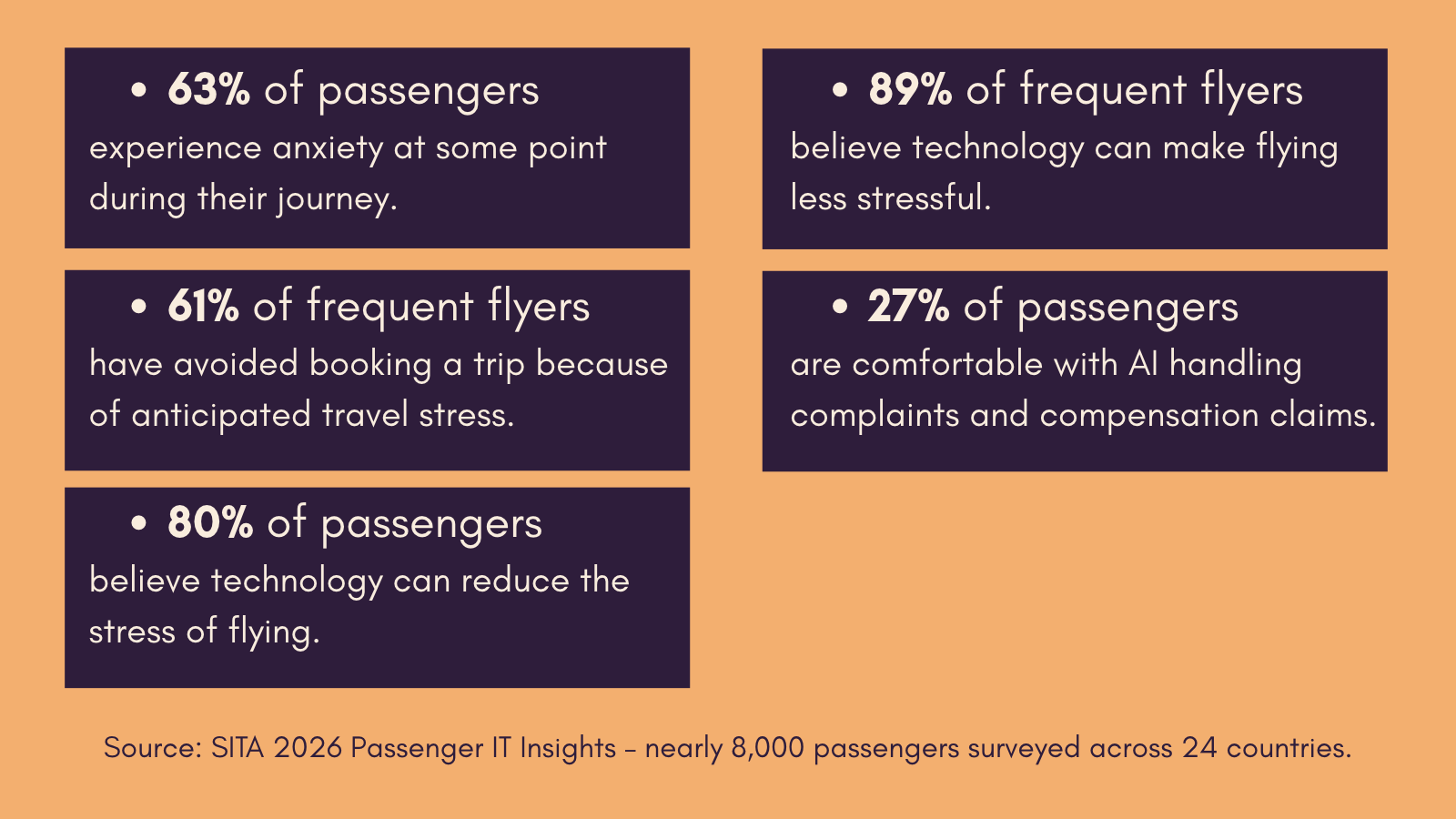
Its 2026 Passenger IT Insights report, based on a survey of nearly 8,000 passengers across 24 countries, reveals that 42% of all travellers have avoided booking a trip because of anticipated stress. Among frequent flyers, that figure rises to 61%.
For UK businesses that depend on face-to-face meetings, international exhibitions and developing relationships overseas, the findings raise an important question: could the experience of travelling itself be getting in the way of commercial opportunities?
Why is flying becoming more stressful?
Despite considerable investment in aircraft, airport infrastructure and technology, passengers report that almost every stage of the air travel experience has become more stressful since 2023.
Nearly two-thirds of passengers experience anxiety at some point during their journey, with that figure rising to 73% among travellers under the age of 30.
Flight delays and cancellations top the list of frustrations, followed by long waiting times. Baggage handling, unexpected fees and concerns about missing connecting flights also feature prominently.
Perhaps surprisingly, even the time spent in an airport terminal between clearing security and boarding a flight has become considerably more stressful. The proportion of passengers experiencing negative emotions during this stage of their journey has trebled since 2023.
David Lavorel, CEO of SITA, believes uncertainty is at the heart of the problem. He said,
“Most of it comes down to not knowing what happens next.”
For a business traveller heading overseas to attend an important meeting, deliver a presentation or secure a new contract, that uncertainty can have consequences well beyond the airport.
Can technology take the stress out of business travel?
There is considerable optimism among travellers about the potential for technology to improve their experience. Some 80% believe it can reduce the stress of flying, rising to 89% among frequent flyers.
The research identifies an association between greater use of technology and lower levels of passenger anxiety. Where travellers have access to information and greater control over their journeys, they tend to feel more comfortable. Real-time baggage tracking, digital travel documents, more accurate information about airport waiting times and proactive notifications about flight disruption could all help.
However, the research reveals a particularly interesting contradiction when it comes to artificial intelligence. Of the five technology categories assessed by SITA, AI ranks first for its perceived potential to improve air travel, but last for trust.
Travellers are relatively comfortable with AI helping them find flights, answering questions and providing journey updates. They are considerably less comfortable with it making decisions on their behalf.
What does this mean for business travel management?
For employers, there is a compelling argument for considering the overall travel experience alongside the financial cost of a trip.
A cheaper flight involving a tight connection, an inconvenient departure time or restrictive booking conditions may represent a false economy if it increases stress, reduces productivity or jeopardises the purpose of the journey. There is also an important distinction between providing travellers with information and providing them with solutions.
Receiving a notification that your flight has been cancelled is helpful. Having an experienced travel professional who understands your requirements, can assess the alternatives and help you reach your destination is something else entirely. At Global Travel Management, we believe the best business travel experience comes from combining effective technology with accessible, knowledgeable human support.
Technology should give travellers greater control over their journeys, while the reassurance of having an experienced professional available when things go wrong should never be underestimated. Ultimately, business travel should be about the opportunities waiting at the destination, not the difficulties of getting there.
To explore how your organisation could make business travel easier for its employees, speak to your Global Travel Management Account Manager.
The full 2026 Passenger IT Insights report is available from SITA.